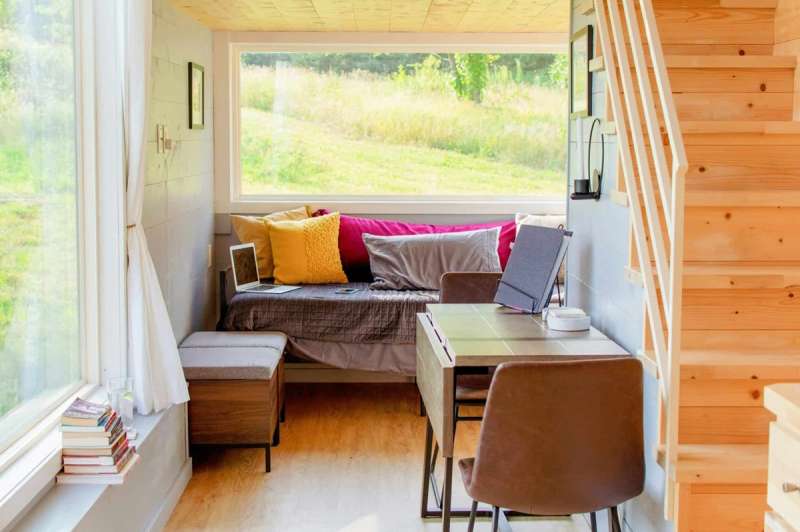
Taking care of a house is no simple task. Between lawn mowing, plumbing woes, floors to clean, broken dishwashers to troubleshoot, and—especially here in Michigan—driveways to shovel, most homeowners can attest that there’s rarely a dull moment in the world of property maintenance.
For some, downsizing to a smaller home makes these tasks easier to manage. If you want to take downsizing to the extreme, a tiny home might be your perfect solution.
There is no statewide law specific to tiny homes in Michigan. Foundation-built homes must meet the state residential code, while local zoning decides where they can go and how small they can be. This means guidelines vary by municipality. But never fear: We’re here to help break down the most important details.
Here’s what to know about buying—or building—a tiny home in Michigan.
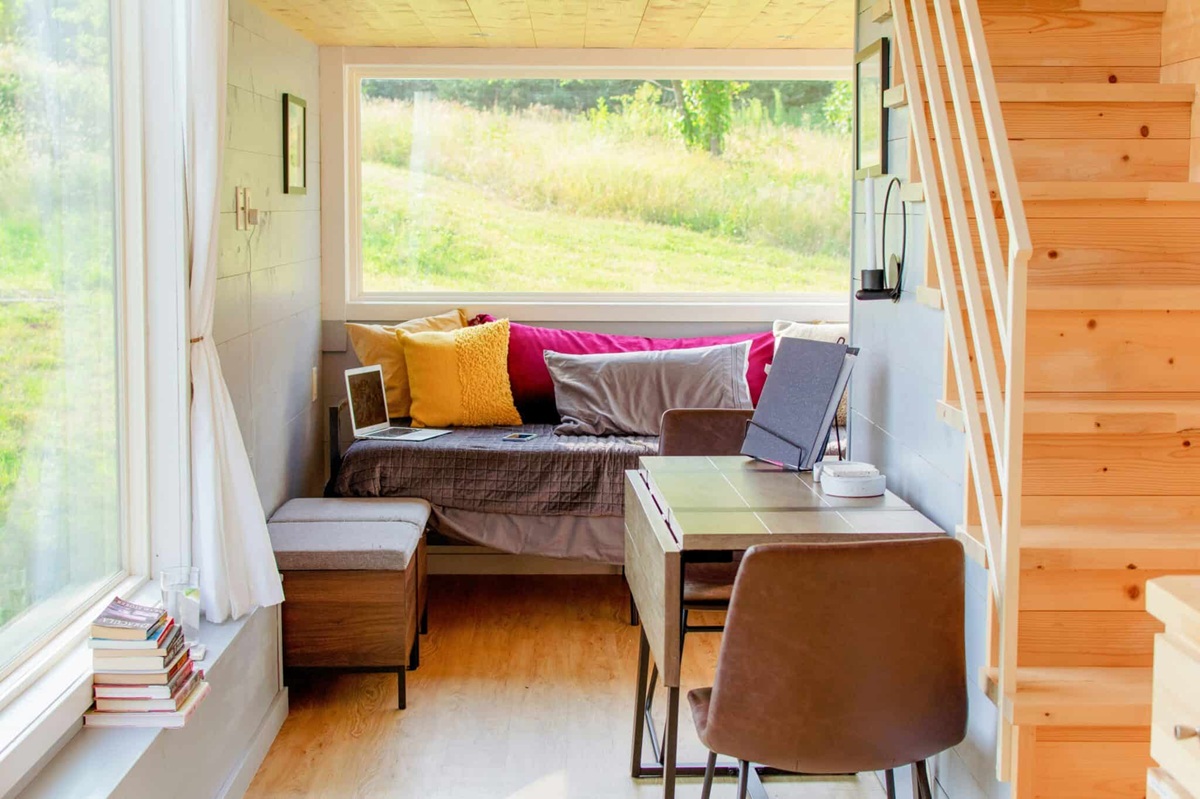
Homes on wheels vs. foundation-built homes
To begin your tiny house journey, you must first determine precisely which type of tiny home you’re interested in. There are two main types: tiny homes on wheels and tiny foundation-built homes—the obvious difference being that one is movable, while the other is not.
If you’re building a home on a foundation, you’ll need to follow the statewide building code for one- and two-family dwellings, including regulations for plumbing, electrical wiring, insulation, and overall structural integrity. Just as with any other home, a tiny home will require appropriate permits and inspections to be considered a legal dwelling.
While these code requirements apply across the board, you’ll need to consult your local city or county zoning rules before building or purchasing to ensure you’re doing legal business. Different cities also have different minimum size requirements.
In other counties, your tiny home might qualify for classification as an efficiency unit. Again, verify the requirements in your area by contacting local officials or visiting your city’s website.
If tiny homes on wheels are more your speed, other considerations arise. First, be aware that wheeled tiny homes are frequently considered RVs, so regulations as to whether they qualify as a legal full-time dwelling vary by location. Oftentimes, RVs cannot be used as a permanent dwelling.
The obvious upside to a tiny home on wheels is the sheer flexibility: In many cases, you can take your tiny home to any campground or campsite that allows RVs to park overnight. Just imagine all the beautiful Michigan sites you could see without technically leaving your home!
No matter which type you choose, a few must-explore elements of tiny home living should take priority. Speak with zoning officials or building departments about septic service and well access (you’ll usually need health department approval for these services), local residential code requirements, and financing options before you make any commitments.
After all, a tiny home is meant to be a place of refuge and comfort, offering a step up from traditional camping while providing more durable, well-equipped long-term housing.
Who to contact about Michigan zoning and building codes, by region
Detroit
Website: Buildings, Safety Engineering and Environmental Department (BSEED)
Contact: Call (313) 224-1317 or email zoning@detroitmi.gov
Grand Rapids
Website: Planning Department and Development Center
Contact: Call (616) 456-4100 or email planning@grcity.us
Lansing
Website: City of Lansing Planning Office
Contact: Call (517) 483-4066
Ann Arbor
Website: Planning & Development Services
Contact: Call (734) 794-6265 or email planning@a2gov.org
Traverse City
Website: Planning & Zoning Department
Contact: Call (231) 922-4778
Marquette
Website: City of Marquette Community Development, Zoning
Contact: Call (906) 228-0425
Sault Ste. Marie
Website: City of Sault Ste. Marie Community Development
Contact: Call (906) 632-5768
Another way to explore your options is by checking whether your community has an ordinance allowing accessory dwelling units (ADUs), as this often means tiny homes are allowed.
Grand Rapids, Ann Arbor, Detroit, and Traverse City are all considered “ADU-friendly,” so check out these regions as you begin your project.
How much does a tiny house in Michigan cost?
We know what you’re thinking: Tiny home life sounds intriguing and fun, but it might not be in the budget. The good news is that if you feel financially prepared to own a “traditional” home in Michigan, you may well fall within the range necessary to make your tiny house dream a reality—though financing options may vary.
While costs, again, vary by location, data from HomeAdvisor showed that the average nationwide cost to completely build a tiny home in the US in 2025 was $45,000. That figure was calculated taking building, materials, and the assumption of a 200-400 square-foot home. So costs can certainly fluctuate greatly.
You can also buy a pre-created “build kit” with unassembled materials, and it’s up to you to figure out how to use them. HomeAdvisor says basic unassembled kits start at around $4,000 and go up to $10,000 but cover only the shell, while finished prefabs typically run $40,000 to $80,000 or more. DIY builds can cut costs per square foot. The short of it: when it comes to tiny homes, you’ve got options—but you’ll need some money set aside.
Don’t forget to factor in taxes, which are typically calculated like normal real estate for a foundation-built tiny home. Tiny homes on wheels are taxed depending on title and location.
And, perhaps most important of all, you might have to purchase land (unless you’re building your tiny home as an additional dwelling in your backyard) and lay a foundation before building or moving your tiny home to the desired location. You should factor in these costs separately from the cost of a build kit or general materials for a tiny home.
Other “hidden costs” to bear in mind include utility hookups (sometimes a challenge in more remote areas), moving costs, and even storage for belongings that don’t fit into your new tiny home. And because we live in Michigan, don’t forget that winterizing your mini abode is a thing you’ll need to do. Every. Single. Year.
The bottom line about tiny homes in Michigan
There are no blanket answers when it comes to building or buying a tiny house in Michigan.
In fact, the only certainty is that you’ll need to do your due diligence before making any final decisions or diving into a building project. Tiny home life might help simplify your days in the long run, but getting there requires careful consideration of multiple moving parts.
If you’re ready to dive headfirst into the world of tiny homes, we wish you luck on the journey!
On the flip side, if you’ve decided you’d rather visit a tiny home than stay in one indefinitely, you’ve got options: Charming destinations like Tiny Digs Lakeshore and Postcard Cabins offer the tiny home experience without the extra work.
This article first appeared on Good Info News Wire and is republished here under a Creative Commons license.
Related: How Michigan woodworkers are reviving hand-tool traditions from the logging era